Over the decades, our lifestyle has changed. Our physical effort to carry out our ADL’s (Activities of daily life) has reduced drastically. For example, walking to grocery store has been replaced by online shopping. The quality of food that we consume today are very good to look and taste but lack nutrients! Most of our food are genetically engineered such that mass production can happen with good quality for sale. In this process – healthy nutrition has been ignored. With medical revolution, our life expectancy has gone beyond 80’s touching the 90’s. We are now faced with rising aged population. In last couple of decades, the majority focus in health care has been towards Geriatric (Aged) Population. With this prologue, I would like to discuss the issues associated with weak and brittle spines in elderly, here in article 2, from the Series: A stitch in time saves nine (Link for Article 1)
Bones are not inert structures; they continue to change over the course of a lifespan. This process of skeletal change is known as ‘bone remodelling’. Remodelling involves the resorption of old or damaged bone, followed by the deposition of new bone material, along with maintaining the body’s balance of calcium and phosphorus. Until about age 30, we build more bone than we lose. After age 35, bone breakdown occurs faster than bone buildup, which causes a gradual loss of bone mass.
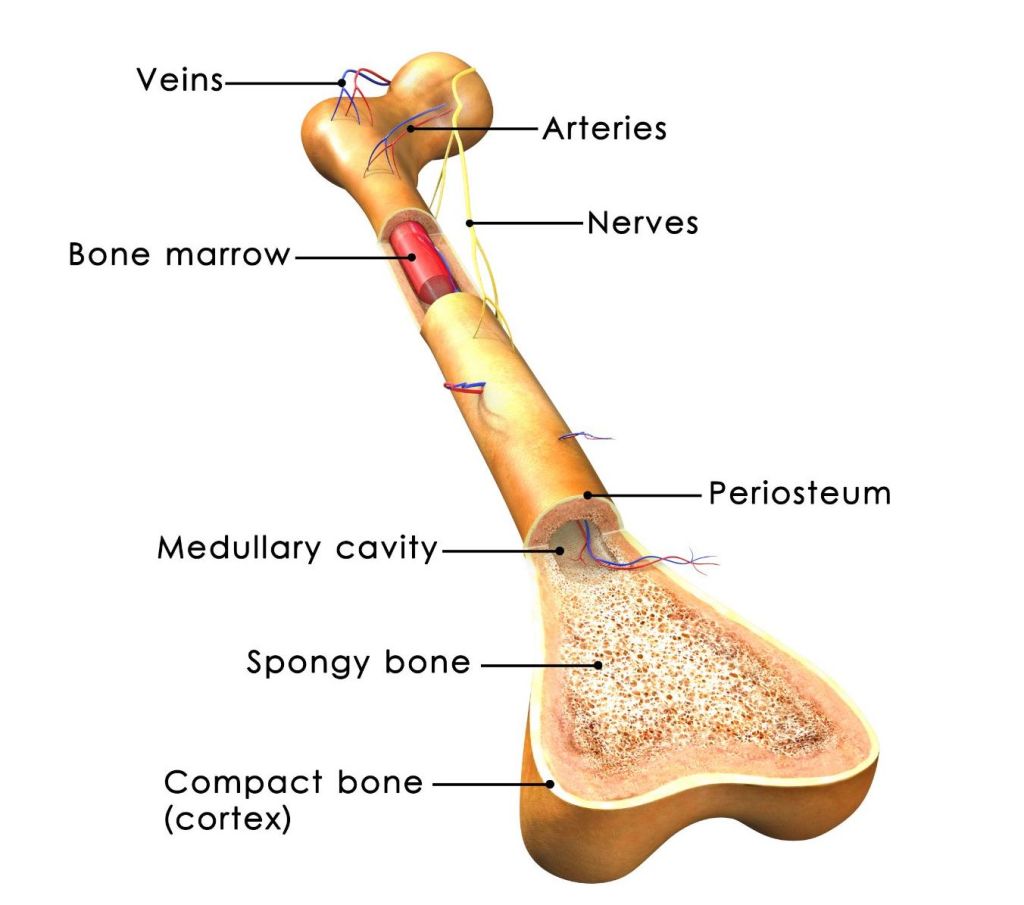
Bones are made of outer hard shell, called the ‘Cortical bone’ that encases the sponge like network of trabecular bone within, known as ‘Cancellous bone’. When the thickness of cortical bone and the density of the spongy cancellous bone decreases, the overall bone mass decreases, making the bones brittle and prone for fracture.
Osteoporosis or weak bones, is a natural phenomenon that happens with aging. The word ‘osteoporosis’ means ‘porous bone.’ It cannot be defied, but however, can be postponed and its intensity can be reduced, thereby reducing the suffering from it. Bones are hard structures in our body. But to keep them hard & strong, they need traction from the muscles, good nutrition, hormonal balance, lifestyle, physical activity and rest. Most of the pre-requisites can be tackled by effort from an individual. But hormonal imbalance needs medical attention. Weak bones results in fractures, delayed healing of fractures and often progression of fractures into non-union and deformity, especially in geriatric age group. Osteoporosis is called a “silent disease” because people who develop it may not notice any changes until a bone breaks — usually a bone in the hip, spine, or wrist.
“Walking, healthy nutrition, daily exposure to sun with a disciplined lifestyle and being happy are ways to keep our bones healthy. Happiness produces hormones which in-turn influences our metabolism”
This article focuses on osteoporosis of Spine, the pillar of our body. Spine is a weight bearing structure, which is used constantly during all postures of our body. Our spine is made of series of multiple bones linked together with inter vertebral ‘discs’ that are natural shock absorbers of the spine. The individual spinal bones ( vertebra ) are bound together by the ligaments and are supported by the muscles which are often referred to as ‘core muscles’. The Spinal cord is the nervous bundle which runs from the brain into the Spine and is connected to the body through the peripheral nerves. Osteoporosis increases the risk of fractures in spine, threatening mobility and causing immense pain.
Osteoporotic Fracture of Spine: We would have come across elderly with hunch back and reduced height. These happen because of multiple fractures in our spinal bones and consequent decrease in its height reducing the overall height of a person. The fractured spine can further settle in an angulation, resulting in deformity such as hunch back in the elderly. This incidence is more in women, as bones generally get weak after menopause (stopping of monthly cycles). Multiple child births, and chronically ignoring the nutritional needs (am sure every mother has saved her favorite food for her kid and family, without relishing it) makes women vulnerable for Osteoporosis.
Spinal fractures do not heal as easily as elsewhere. Since rest is required for proper approximation of the fractured bones (we would have seen the cast applied in limbs for fractures). But our Spine is active at rest, sitting, standing or any posture that we assume. Further, we cannot apply a cast and rigidly immobilse it. The braces that are given offer less than 20% of stability. The larger issue is instability of the spine, which in turn can result in injury to the spinal cord and consequent paralysis. An irreversible & miserable condition.
Osteoporotic fractures of the spine are common in elderly. With extended life expectancy, awareness about this osteoporosis and osteoporotic fractures are a must to the public.
A simple trivial fall (or many a times even the incident may be unnoticed) can result in fracture due to weight bearing property of Spine. If a speeding bus or car goes over a speed breaker or pothole, the jerk that happens can result in spinal fracture in a seated elderly person with osteoporosis. Usual clinical presentation is severe pain at the site of fracture, often making them bedridden. Sometimes the pain can travel along the nerve root distribution. Bed-rest often relieves the pain, but any movement brings the pain back in full force. Once the fracture heals in about 4-6 weeks, the pain reduces. But, bedrest further weakens the bone. Being immobile in bed for 6 weeks is not a easy task especially in our current day life. Since the fracture is subjected to physical forces of nature, especially the body weight, the healing always happens with reduced height of the spine. Gradually this reduced height of the bone and its angular shape results in deformity such as hunch back.
The modern-day Solution:
Suffering from Osteoporotic Spinal fractures can be alleviated by simple percutaneous needle procedure, where a silicone balloon is introduced into the fractured spine to impact the spongy part of the bone within the vertebra to create free space surrounded by dense bone. Acrylic (bone cement) is then filled in this space to increase the strength of the vertebrae. This procedure is known as Kyphoplasty. A quick, simple day care procedure, where the patient can return home in the same evening – pain free and walking! This technique has been in practice in last couple of decades. Fearing surgery, many don’t seek medical attention. This article is an effort to create public awareness towards Kyphoplasty, a perfect example of minimally invasive pinhole procedure. This can bring back an individual back to life from pain and suffering.
But if the fracture is not addressed on time and if it progresses further, it can result in compression of the spinal cord resulting in spinal cord injury and paralysis. If the fractured bone is pressing on the spinal cord, this pinhole procedure cannot be done. In these case scenarios, major open spinal surgical procedure with titanium screws and rods are required. What could have been a daycare – 1 day procedure coverts into couple of weeks scenario.
Kyphoplasty is that single stitch which can save nine actual stitches over the spine!
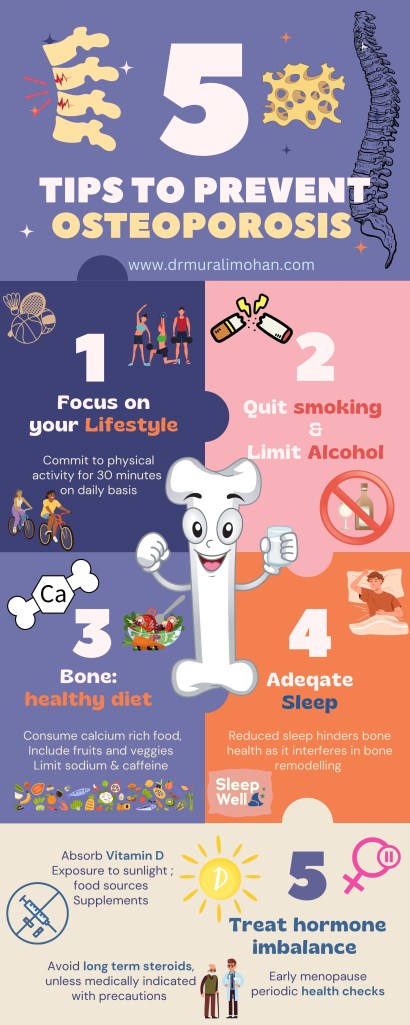
Prevention is better than cure! Practicing healthy lifestyle with good food habits can prevent osteoporotic fractures. But in those who are suffering from it, there are solutions to bring them back to life.
Contact drmurali78@gmail.com or whatsapp at +919483861505 to reach out to the Author.
Thank you for throwing light on a very important issue people are facing these days. This article covers it all.
With our lifestyle and less physical activities we are so prone to Osteoporosis.
Appreciate your efforts and time spent on brining in the awareness of early prevention than worsening it later.
Kudos to you for always bringing out the right issues and suggesting simple solutions for them.
Thank you !
Thanks forgiving information on kyphoplastynand making us aware of the simple process for the treatment of fragile bones in day care.
Thanks will post in my large group of senior citizens.
Thank you, Dr. Murali for a very educative and informative article.
I personally went through spine surgery with your hand. Titanium screws and rods are now part of my body. I live a normal life.
Your commitment in relieving pain from people is remarkable.
Kudos for outlining a holistic approach with preventive information at every stage. Knowledge and awareness is key to healthy living. Keep the blog going.
Thanks Dr Murali, for giving a beautiful insight on Osteoporosis and Osteoporotic Spine injury.
I see lot of such cases with my Geriatric population.
Such writeups can take away the fear of surgeries/procedures.
As you put it words “Kyphoplasty is that single stitch which can save nine actual stitches over the spine!”, makes a lot of sense for people undergoing this issue.
Thanks, one again for giving your precious time for putting your thoughts!
Thanks Dr Murali, for the article on Osteoporosis and Osteoporotic spine.
The writeup highlights the need of early intervention and treatment to the most affected population, the Geriatric population. It helps the affected not to delay in reaching out.
This sentence “Kyphoplasty is that single stitch which can save nine actual stitches over the spine!” makes a lot of sense.



Thank you for taking out time in writing blogs sir
Your giving us a lot of information on health consciousness
LikeLike
Thank you for throwing light on a very important issue people are facing these days. This article covers it all.
With our lifestyle and less physical activities we are so prone to Osteoporosis.
Appreciate your efforts and time spent on brining in the awareness of early prevention than worsening it later.
Kudos to you for always bringing out the right issues and suggesting simple solutions for them.
Thank you !
LikeLike
Kyphoplasty is that single stitch which can save nine. Very Informative.. Thank you for sharing. 🙏
LikeLike
Thanks forgiving information on kyphoplastynand making us aware of the simple process for the treatment of fragile bones in day care.
Thanks will post in my large group of senior citizens.
LikeLike
Thank you, Dr. Murali for a very educative and informative article.
I personally went through spine surgery with your hand. Titanium screws and rods are now part of my body. I live a normal life.
Your commitment in relieving pain from people is remarkable.
LikeLike
Timely article about kyphoplasty.Many may not know about this procedure and how it could help in preventing spinal damage.Thank you Dr Murali.
LikeLiked by 1 person
Thankyou very much sir. It’s very useful article
LikeLike
Knowledgeable article for us sir thank you 🙏
LikeLike
Useful information sir, Thank you..
LikeLike
Educative and informative article Dock,
Creating awareness is so very important in today’s lifestyle in people.
LikeLike
Very useful information sir
LikeLike
Very nice informative article sir.
Best wishes in your work to improve quality of life.
I look forward to reading your next article.
LikeLike
Kudos for outlining a holistic approach with preventive information at every stage. Knowledge and awareness is key to healthy living. Keep the blog going.
LikeLike
Thanks Dr Murali, for giving a beautiful insight on Osteoporosis and Osteoporotic Spine injury.
I see lot of such cases with my Geriatric population.
Such writeups can take away the fear of surgeries/procedures.
As you put it words “Kyphoplasty is that single stitch which can save nine actual stitches over the spine!”, makes a lot of sense for people undergoing this issue.
Thanks, one again for giving your precious time for putting your thoughts!
LikeLike
Thanks Dr Murali, for the article on Osteoporosis and Osteoporotic spine.
The writeup highlights the need of early intervention and treatment to the most affected population, the Geriatric population. It helps the affected not to delay in reaching out.
This sentence “Kyphoplasty is that single stitch which can save nine actual stitches over the spine!” makes a lot of sense.
Thanks again Doctor for the effort and time.
Waiting for the next blog
LikeLike